
Auburn Clearway Restoration
Structural Drying Auburn, WA
Auburn Clearway Restoration provides structural drying in Auburn, WA, for homeowners, landlords, and businesses with wet drywall, damp subfloors, warped wood flooring, or moisture behind cabinets after a leak. We measure hidden moisture, set up drying equipment, and track progress against drying goals. Call when the water is gone but your home still feels damp.
- 24/7 Emergency Response
- WA Registered, Bonded & Insured
- IICRC-Certified Technicians
First steps
What to Do While Your Home Is Still Wet
A floor can look dry while water remains underneath it. After the leak has been stopped, avoid covering damp areas with rugs or moving furniture back against wet walls.
Keep away from wet electrical equipment and any water that may contain sewage.
Tell the drying crew when the leak began and which rooms were affected.
Photograph lifted flooring, wet baseboards, and stains before repairs cover them.
Do not remove installed drying equipment or change its settings without speaking to the crew.
Signs Your Home Needs Structural Drying
Removing puddles does not remove moisture from building materials. These warning signs may appear hours or days after the original leak.
Flooring Starts to Cup or Lift
Hardwood boards may develop raised edges. Laminate can swell at its joints, while vinyl plank flooring may conceal damp underlayment or a wet subfloor.
Baseboards or Drywall Stay Damp
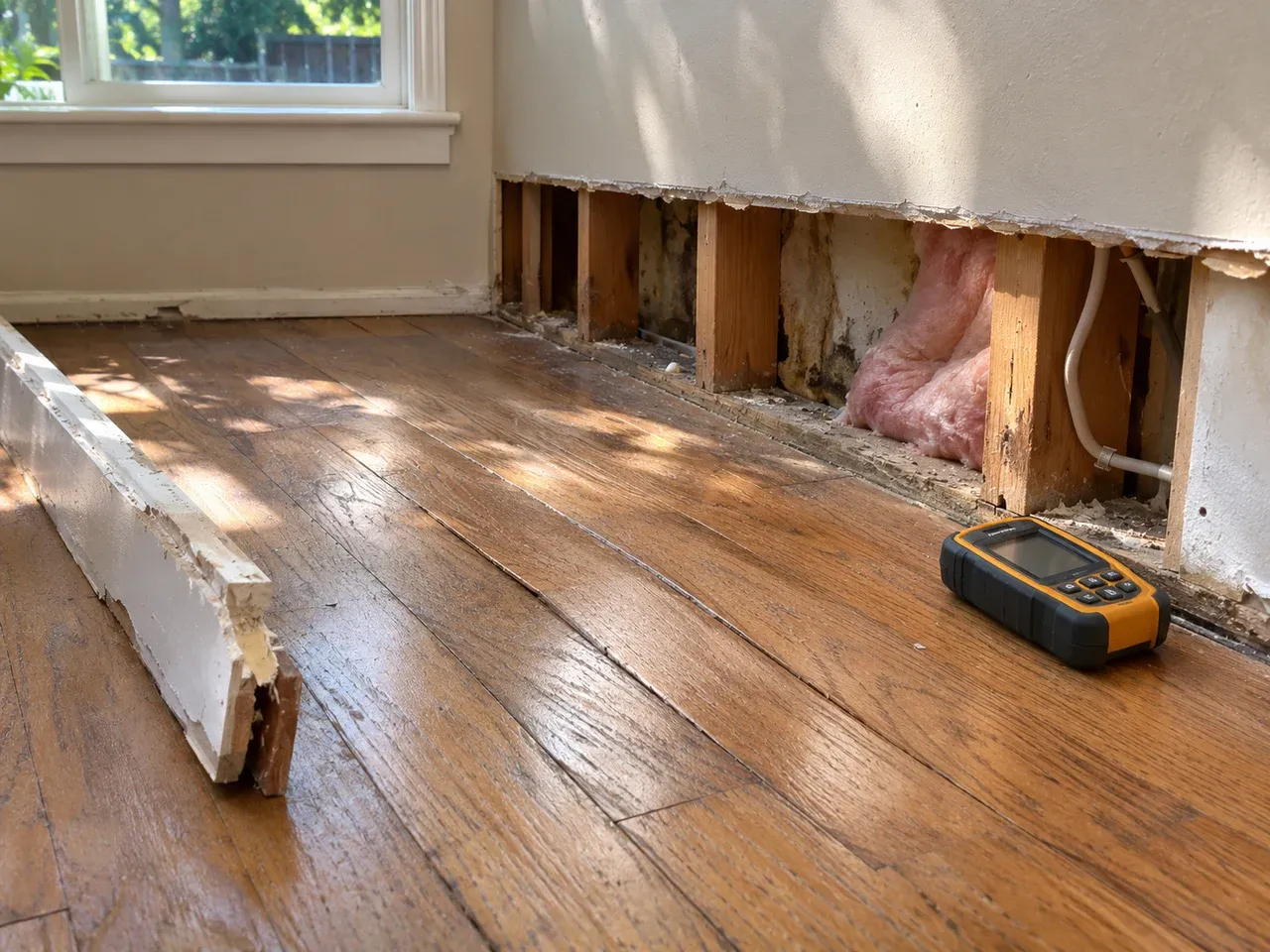
Soft trim, bubbling paint, and dark marks near the floor can indicate moisture inside the wall, not just on its surface.
A Room Smells Musty After Cleanup
A lingering odor can have several causes, including trapped moisture. It calls for inspection rather than assuming mold is present.
Cabinets Hide a Wet Area
Water can collect beneath kitchen toe-kicks and behind fixed bathroom vanities. The visible floor may be dry while concealed areas remain wet.
Why Moisture Remains After Water Removal
A supply-line leak can soak the subfloor beneath a dishwasher. Water from an upstairs bathroom may reach ceiling cavities and insulation. A roof leak can wet drywall without leaving a deep puddle anywhere.
Wood, drywall, carpet padding, and concrete absorb and release moisture at different rates. Structural drying in Auburn, WA, should begin with the affected materials and the actual water source, not with a fixed number of fans.
Structural Drying Auburn, WA — What We Dry
Our work addresses moisture left after the leak stops. Structural drying is part of water damage mitigation: we assess what can dry in place and what must be removed first.
Wall Cavities and Drywall
Moisture can remain around baseboards or behind painted drywall. We check the affected wall area and plan airflow or material access when needed.
Subfloors and Wood Flooring
Water beneath finished flooring can be difficult to see. We assess the wood and layers below it before deciding whether drying in place is suitable.
Ceilings and Insulation Areas
An upstairs leak may leave damp ceiling materials. Sagging or contaminated sections can require removal instead of drying alone.
Cabinets and Enclosed Spaces
Toe-kicks, vanity bases, and tight corners can hold moisture. We look beyond the front edge of a cabinet before calling an area dry.
Related water extraction and removal addresses pooled water before this stage begins.
Our Structural Drying Process
Map the Moisture
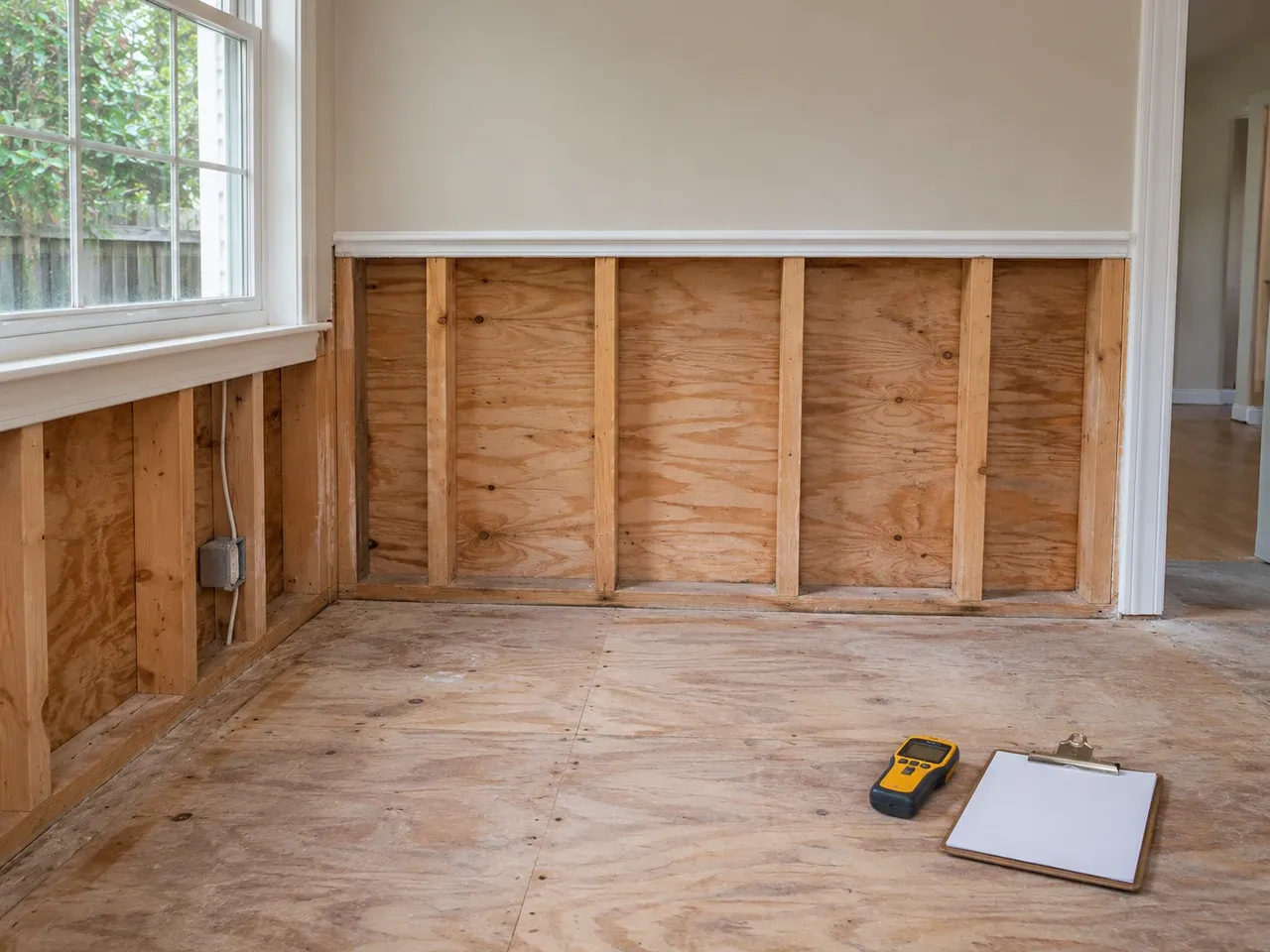
We inspect the affected rooms and measure damp materials at several points. A moisture meter helps locate wet areas that cannot be judged by touch. We also compare readings with similar, unaffected materials where appropriate.
Set Drying Goals
Different materials need different targets. We establish what successful drying should look like for the affected wood, drywall, or other building materials before deciding when equipment can be removed.
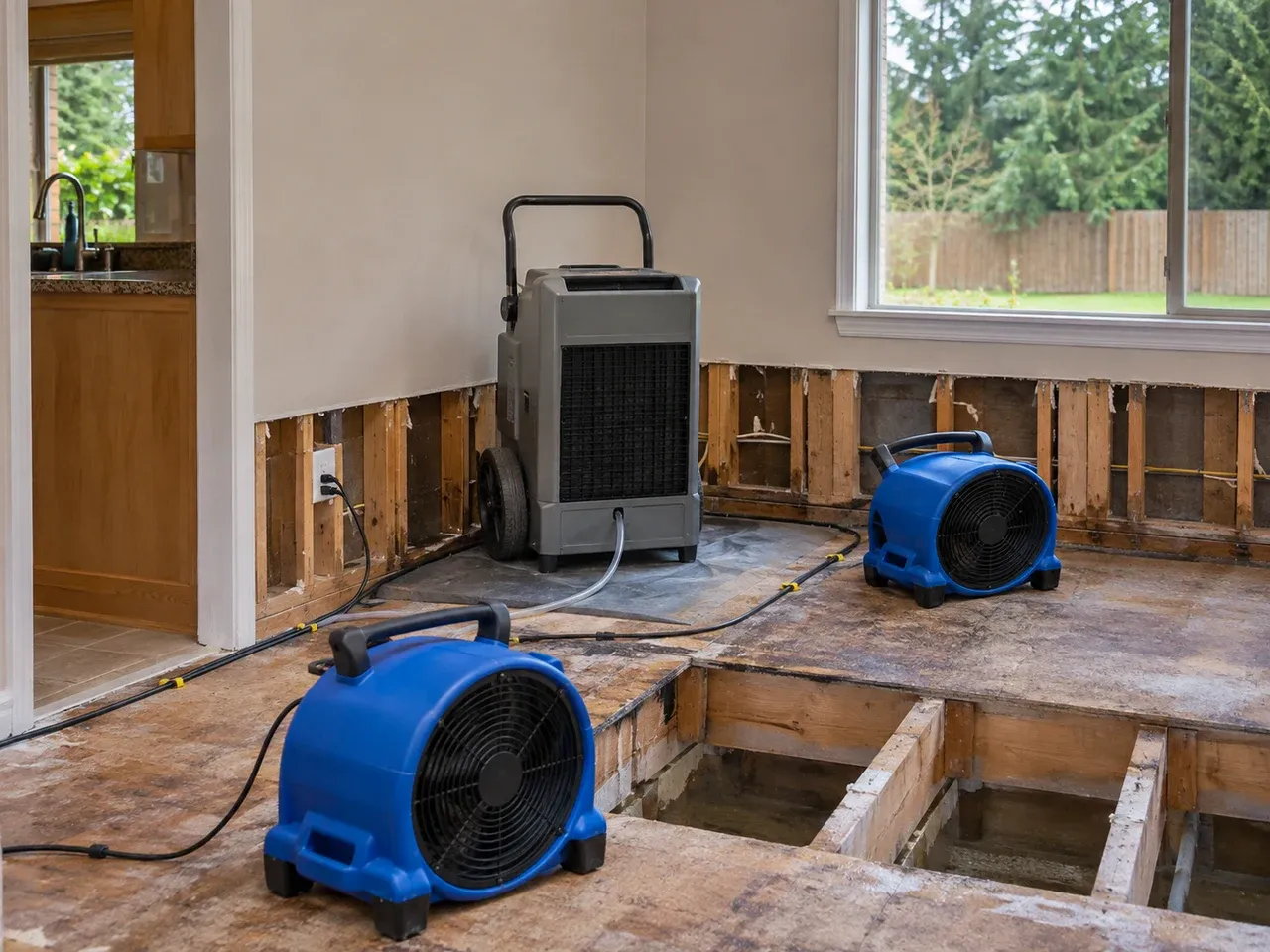
Position Air Movers and Dehumidifiers
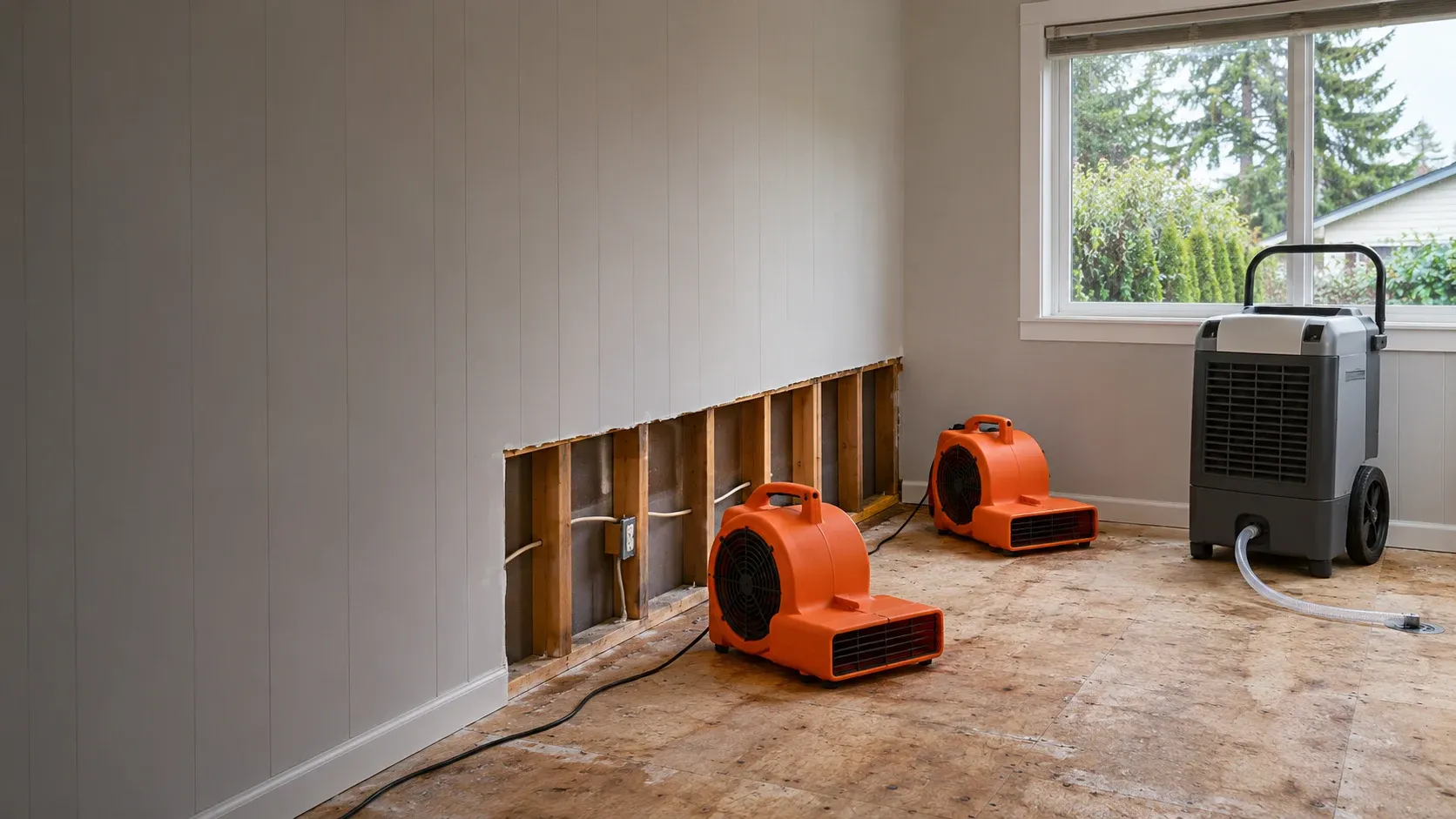
Air movers circulate air across accessible wet surfaces. Dehumidifiers remove moisture from the air so that drying can continue. Equipment number and position depend on the room layout, moisture load, and available power.
Check Conditions and Adjust Equipment
We monitor material moisture, temperature, and relative humidity as drying progresses. If one area remains wet, the crew may change airflow, reposition equipment, or reassess materials that are not responding as expected.
Confirm Results and Explain Repairs
When the measured materials meet the drying goals, we document the results and explain which finishes still need water damage repair. Drying a subfloor does not automatically repair a swollen laminate plank or a stained ceiling. Learn what follows on our water damage reconstruction page.
How Different Materials Respond to Drying
The material underneath a finished surface can matter more than what a homeowner sees. These examples show why the same equipment schedule cannot be used everywhere.
| Material | Main drying concern |
|---|---|
| Drywall | Moisture in lower wall sections or enclosed cavities; damaged or contaminated sections may need removal |
| Plywood or OSB subfloor | Water trapped beneath vinyl, laminate, or carpet; swelling may remain after drying |
| Hardwood flooring | Moisture below boards, cupping, and changes in wood moisture content |
| Concrete slab | Slow moisture release and moisture trapped beneath flooring finishes |
| Insulation | Some wet or contaminated insulation cannot be effectively dried in place |
Structural Drying Challenges in Auburn Homes
Rainfall and roof leaks
Fall and winter rainfall in Auburn can reveal roof leaks and moisture around foundations. A damp crawlspace may need a drainage or plumbing problem corrected before drying will hold. That is different from a one-time washing machine leak inside a heated room.
Building materials and access
Structural drying in Auburn, WA, also varies with the building: older South Auburn homes, hillside properties in Lea Hill, and newer homes around Lakeland Hills can have different floor assemblies and access points. The address alone does not determine the drying plan.
Why Choose Auburn Clearway Restoration for Structural Drying?
Drying Decisions Based on Measurements
We check affected materials rather than using a surface that feels dry as the finish line. This helps identify hidden moisture under flooring or behind trim.
Equipment Matched to the Room
Air movers and dehumidifiers are positioned for the affected space and adjusted if readings show slower drying in one area.
Clear Updates on Drying Progress
We explain why equipment needs to stay, what the moisture checks show, and which rooms or finishes still need attention. Homeowners should not be left guessing when the fans will stop.
IICRC-Certified Technicians and Documented Results
Our team brings restoration training, drying logs, and a written record of affected materials. Auburn Clearway Restoration is WA registered, bonded, and insured.
Drying Records and Insurance Documentation
Drying records
Drying logs can show where moisture was measured, how readings changed, and when equipment was removed. They also help distinguish emergency mitigation from later repairs. We provide photographs, recorded readings, and a written work scope for the affected areas.
Insurance documentation
For structural drying in Auburn, WA, after a sudden leak, an insurer may request these records when reviewing the claim. Coverage depends on the policy and cause of loss. A drying invoice and a reconstruction estimate may cover different work, so ask for that distinction in writing.
About Auburn Clearway Restoration
Auburn Clearway Restoration works on the moisture that remains after a property has been flooded or a hidden leak has been discovered. Structural drying is a measurement-based service: the goal is to dry materials that can safely remain, not simply to run equipment for a preset number of days.
Our team explains drying goals, equipment changes, and any repair work that should follow. For broader damage assessment and repair planning, see our water damage restoration homepage.
Auburn Neighborhoods We Serve
King and Pierce counties
- North Auburn
- Downtown Auburn
- South Auburn
- Southeast Auburn
- Lea Hill
- West Hill
- Lakeland Hills
Drying services cover North Auburn, South Auburn, Downtown, Lea Hill, West Hill, Southeast Auburn, and Lakeland Hills. Wood subfloors, concrete slabs, and room layouts shape the plan. We serve both King and Pierce County portions of Auburn.
Structural Drying FAQs
How long will fans and dehumidifiers run in my house?
Often several days, but there is no reliable fixed schedule. Wet material type, the size of the affected area, humidity, and drying progress determine when equipment can come out.
Can I turn off the drying equipment at night?
Ask the drying crew before switching anything off. Interruptions may slow drying and affect the monitoring plan. Tell the crew about noise, heat, or electrical concerns so they can explain safe options.
How do you know when a wall or subfloor is dry?
Technicians compare moisture readings against appropriate drying goals and, when useful, similar unaffected materials. Paint that feels dry or carpet that no longer squishes is not enough evidence.
Will vinyl plank flooring need to be lifted?
Sometimes. If water is trapped beneath a floor finish, access may be required to check the underlayment and subfloor. The decision depends on the flooring system, contamination, and damage.
Does structural drying prevent mold after a leak?
Prompt moisture control reduces the risk, but it cannot guarantee that mold will not develop. If mold or contaminated materials are present, separate cleaning or mold remediation may be needed.
Will insurance pay for drying equipment and monitoring?
It may, depending on the cause of damage and policy terms. Ask for the drying scope and monitoring records, then confirm coverage, deductibles, and approved work with your insurer.
Get Help With Structural Drying Auburn, WA Today
Still noticing damp walls, warped flooring, or a musty room after water cleanup? Call Auburn Clearway Restoration for moisture inspection, air movers, dehumidifiers, drying progress checks, and a clear explanation of the next repairs.